An Epic Epidemic
An illness that makes COVID-19 seem mild

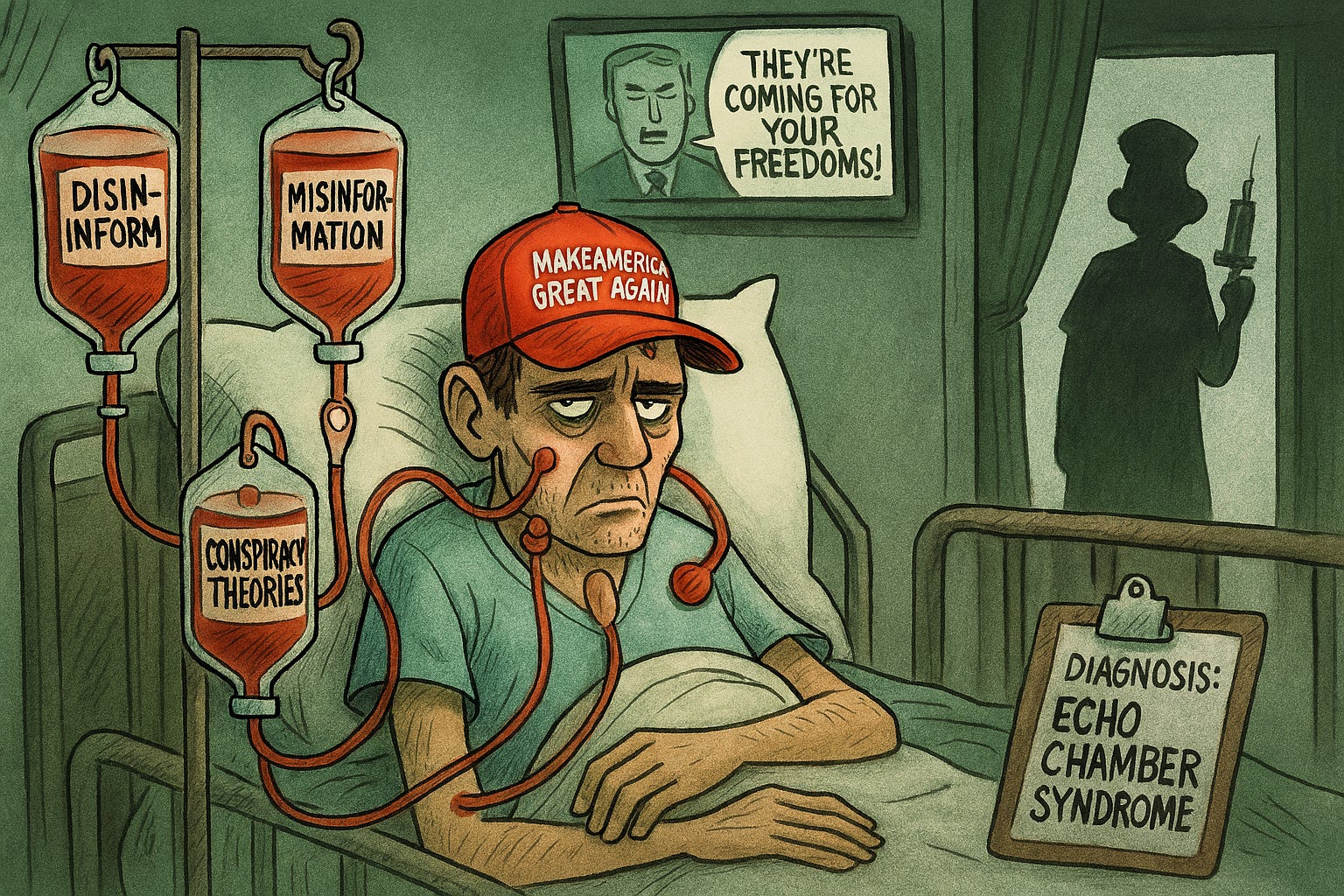
To date, the total number of deaths attributed to COVID-19 in the United States is 1.235 million, topping the 675,000 deaths attributed to the 1918-19 Flu Pandemic by a significant number. We are currently suffering from a malady of epic proportions; however, that has not been identified, quantified, or even recognized by any competent medical authority or by the population at large. That illness is the ignorance caused by exposure to misinformation, disinformation, conspiracy theories, and outright lies that, while not directly killing anyone, is the cause of untold suffering and death. In 2023, for instance, the head of the Food and Drug Administration stated that misinformation and disinformation about public health are the primary causes of U.S. life expectancy being three to five years lower than in other high-income countries.
It’s not that people are unaware of the dangers of misinformation and disinformation; they are. In 2025, 70 percent of Americans identify misinformation and disinformation as ‘major problems.’ The real problem, though, is that they are so divided on the information sources they trust that they remain vulnerable to exploitation by bad actors. For example, 67 percent of Republicans trust Fox News, while Democrats place more trust in ABC and NBC (78 percent). Regardless of politics, people tend to be more trusting of information from those they consider ‘family,’ ‘people like me,’ and ‘friends.’ Sadly, these sources are often simply providing information they’ve received from ‘trusted’ sources. An interesting side note here, in a Disinformation in Society Report by the Institute for Public Relations survey done March 4 – 15, 2025, of 2,000 US. Adults, 72 percent, identified the federal government as a source of disinformation. Republicans blame former President Biden 81 percent) and Vice President Harris (81 percent), while Democrats blame Trump (85 percent), Fox News, and X (80 percent, and other Republican figures. Elon Musk, for example, is blamed by 80 percent of Democrats and 31 percent of Republicans.
With this kind of partisan divide and the tendency for people to prefer receiving information from sources that confirm their existing beliefs or attitudes, the disease of ignorance can only worsen.
Here’s an example of the kind of ignorance I’m referring to. Recently, my wife’s realtor mentioned that a friend of his supports Donald Trump because all of his sons have served the country in uniform. When asked where his friend got this information, he shrugged. When informed that his friend was totally wrong, that not only did Trump’s sons never serve in the military, but he wangled a military deferment by his father having a doctor diagnose him with bone spurs, the realtor looked surprised and incredulous, like this widely-known information was ‘news to him.’
This is a single, isolated example, but it is by no means a rare occurrence. When one of the primary vectors spreading incorrect information is the head of state, though, it is not surprising that so many people are afflicted.
The ignorance pandemic can’t be cured by a warp-speed vaccine development program as COVID was. It’s embedded too deeply in our society, and across too many generations. Conspiracy theories, if not prevented, are hard to root out, according to a study conducted by doctoral student Cian O’Mahony at University College Cork in Ireland. The most promising way to counter conspiracies is to warn people ahead of time or teach them how to spot weak evidence. While this won’t totally eradicate disinformation and conspiracies, it’s essential because belief in such things can lead people to act in ways that harm others—and themselves. The people who stormed the Capitol on January 6, 2021, for example, believed the lie that the 2020 election had been stolen, and people who believed in the COVID vaccine conspiracies put themselves at risk of dying. It’s also essential to distinguish between misinformation, which is simply inaccurate, and disinformation, which is deliberately misleading and the basis of many conspiracies.
Ignorance caused by disinformation is likely to persist for a long time to come. Our only hope, perhaps, is to try to mitigate its most harmful effects. That, however, will take all of us, as well as those in government, media, and other information-generating institutions, to commit to truth rather than expedience or political chicanery.
All I can say to that is, good luck. and keep your fingers crossed.