Authoritarianism 101: Demonization and Scapegoating
Destruction and deflection can backfire

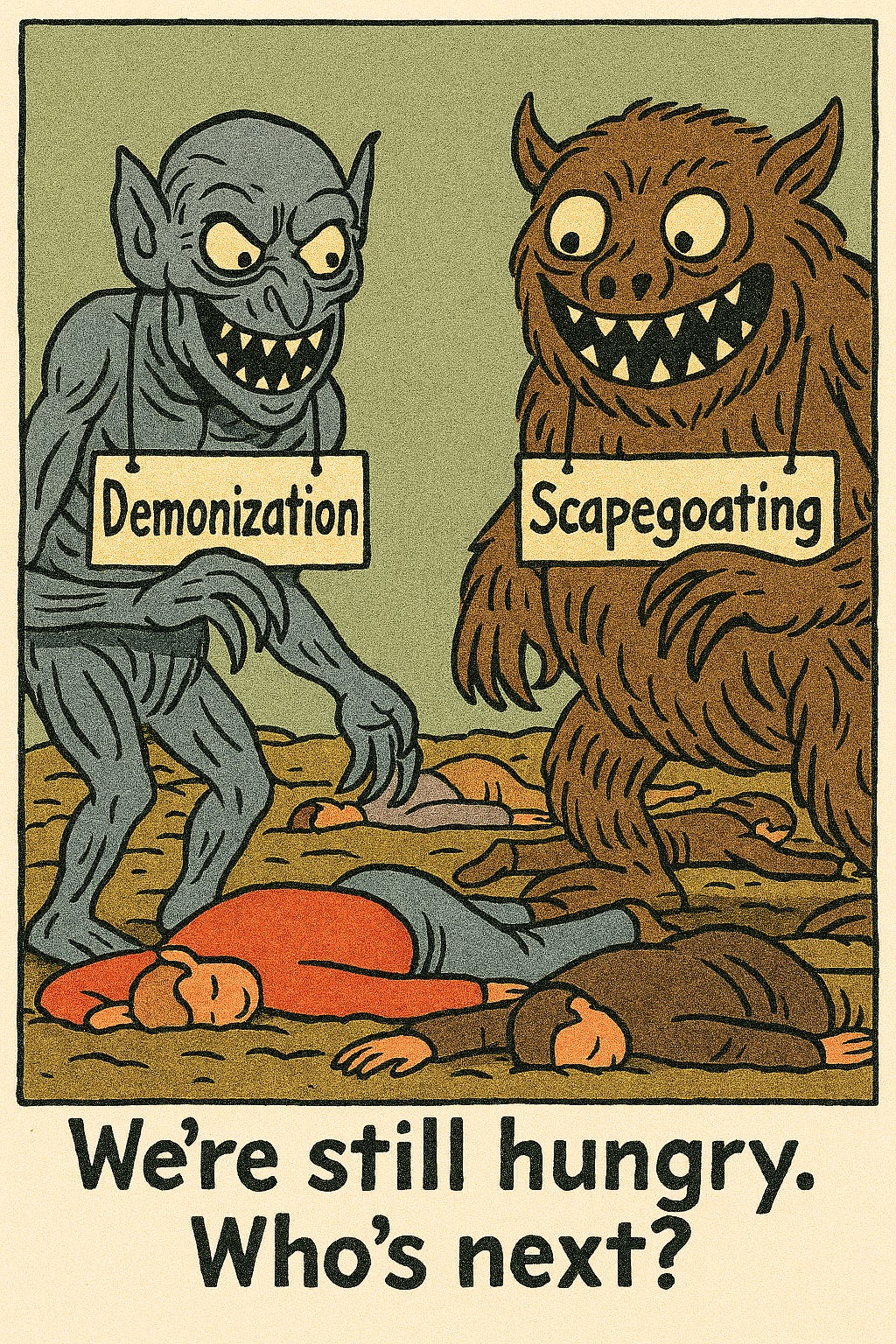
Among the many things authoritarian leaders set out to do, often before they even gain power over a country, is the demonization of any opposition and the designation of scapegoats. The former is to neutralize any organized opposition to their rule, and the latter is to deflect the attention of citizens away from the inevitable faults and failures that accompany authoritarian rule.
Neutralize opposition
Tyrants detest private ownership—except that owned by them and their cronies—and one of the first things they usually do is to curtail the financial freedom of any potential opponents. Depriving opponents of economic resources is bad enough, but budding authoritarians seldom stop there. They also seek to demonize their opponents by denouncing their character and labeling them as ‘less than human.’ This results in the degradation of public discourse and an atmosphere of ‘we-they’ conflict that makes any compromise or mutual agreement impossible in the long run. Politics that is fueled by grievance and animosity creates corrosive conditions that are hard to undo.
Deflect with scapegoats
Closely related to the demonization of political foes is the practice of designating specific individuals or groups as responsible for real or imagined ills in a society. The autocratic leader uses scapegoating to deflect attention away from their weaknesses or misdeeds, and this tactic, which plays on fears and grievances within a society, can lead to further alienation of various groups in a country from one another, ultimately benefiting the autocrat. The danger of scapegoating, especially when disinformation is used to spread it, is that it can lead to intergroup violence and harm to otherwise innocent people. Furthermore, scapegoating can have unintended and unwelcome consequences, such as the current administration’s mass deportation policy’s impact on the American economy, in particular the agricultural economy, which depends so heavily on foreign temporary workers, many of whom are undocumented.
Unfortunate precedents
The use of demonization and scapegoating is a short-term, transactional approach to governing that can have unfortunate consequences for those who employ these tactics. Once such tactics have been established as ‘normal,’ the authoritarian, when out of power—and ultimately, most autocrats fall—can find himself on the receiving end. This cycle of retribution can then become a part of a country’s political system that is difficult to eradicate, and the ultimate victims are the citizens. Like Dr. Frankenstein, the authoritarian often creates a monster that turns on him.